
Case Study
Advancing Culturally Competent Palliative & End-of-Life Care at Scale
The Challenge
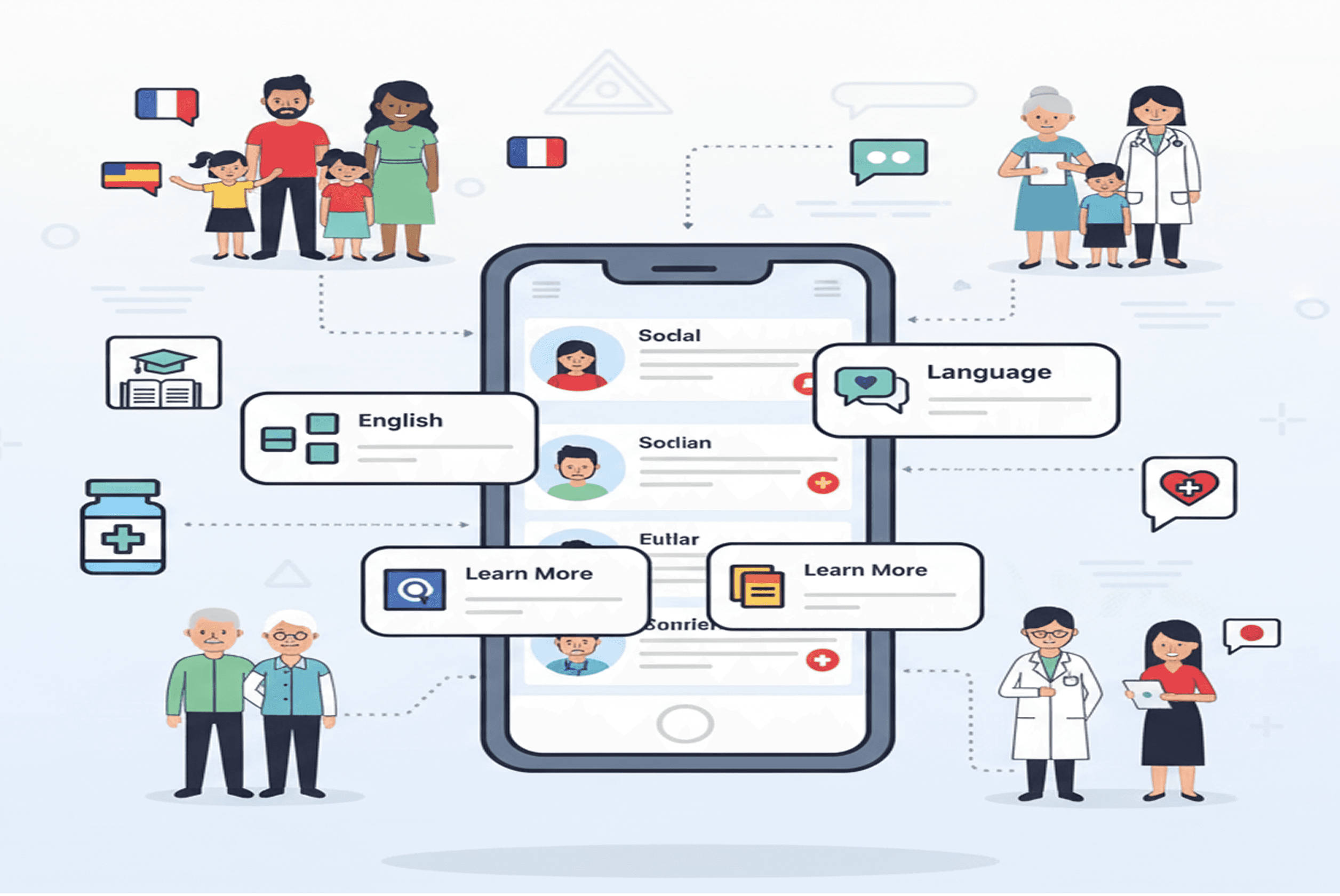
Palliative and end-of-life care (PEOLC) conversations are some of the most sensitive and high-stakes interactions in health care. In Alberta, families and providers were navigating these conversations across:
• Multiple languages
• Diverse cultural expectations around illness, death, and decision-making
• Varying levels of health literacy
• Systems not designed for culturally responsive engagement
The result was uneven understanding, delayed conversations, and missed opportunities for care that reflected family values.
The challenge was not awareness alone — it was how to build shared understanding at scale.
What We Did
Built a Caregiver-Centered Digital Tool
We developed MyHuddle, a caregiving app designed to help families:
• Multiple languages
• Diverse cultural expectations around illness, death, and decision-making
• Varying levels of health literacy
The tool was designed for real-world use, not idealized care journeys.
Developed & Translated a Microlearning Course
We created a culturally grounded PEOLC microcourse and translated it into seven languages, prioritizing:
• Health literacy
• Cultural relevance
• Usability during emotionally difficult moments
Translation was supported by professional teams and quality-assured to ensure meaning — not just words — were preserved.
Reached Families at Population Scale
To extend awareness beyond formal care settings, the project leveraged:
• Social media campaigns
• Digital advertising
This approach reached over one million people, helping normalize PEOLC conversations across communities that are often underserved by traditional outreach.
Educated and Engaged Service Providers
We delivered presentations and education sessions to over 500 service providers, focusing on:
• Culturally competent PEOLC conversations
• Understanding family context and expectations
• Reducing friction and misunderstanding during care discussions
This work supported providers in applying PEOLC principles more effectively across diverse populations.
Conducted a Community-Informed Needs Assessment
Through over 100 hours of engagement with:
• Multicultural families
• Community members
• Service providers
We completed a needs assessment report that surfaced:
• Gaps in understanding and engagement
• Barriers created by language, culture, and system design
• Opportunities to improve PEOLC delivery across communities
The findings helped inform future program design and policy considerations.
Outcomes
The PEOLC Awareness Project resulted in:
• Increased access to culturally grounded PEOLC education
• Scalable tools supporting family understanding
• Improved provider confidence in cross-cultural conversations
• System-level insight grounded in lived experience
Most importantly, it demonstrated that culturally competent care is not a single intervention — it is an integrated approach.
Why This Matters
End-of-life care demands more than clinical expertise. It requires:
• Clear communication
• Cultural humility
• Shared understanding
• Tools that support families where they are
This project shows how education, technology, translation, and community engagement can work together to support better care — at scale
Related Capabilities
This work informs our ongoing focus on:
• Language & shared understanding
• Caregiver-centered education
• Provider training and engagement
• System-level program design